
Growth changes how technical organizations need to communicate.
In smaller technical and B2B companies, communication often stays close to the people carrying the work.
The founder explains the business. Senior staff know how to position services naturally in conversation. Relationships generate opportunities. Reputation fills in the gaps where formal marketing still does not exist.
For a while, that works surprisingly well.
In fact, some organizations introduce marketing strategy too early. Services are still evolving. The market is still being understood. The company is still figuring out where it fits best commercially. At that stage, flexibility is often more valuable than rigid structure.
Then the business grows.
New services get added.
More people begin communicating externally.
Proposals become more frequent and more complex.
Marketing activity increases.
Visibility expands beyond existing relationships and referral networks.
This is usually where communication starts depending too heavily on individuals.
One department describes the company one way. Another emphasizes something completely different. The website reflects one version of the organization while business development conversations reflect another. Clients understand the capability, but not always where the company is strongest or most differentiated.
Nothing appears dramatically broken from the outside.
But internally, people start revisiting the same conversations repeatedly:
How should the business be described?
What should be emphasized?
Which services matter most commercially?
Why does messaging keep changing depending on the audience?
At a certain stage of growth, organizations stop being explainable through proximity alone.
That is usually the point where strategy starts becoming necessary.
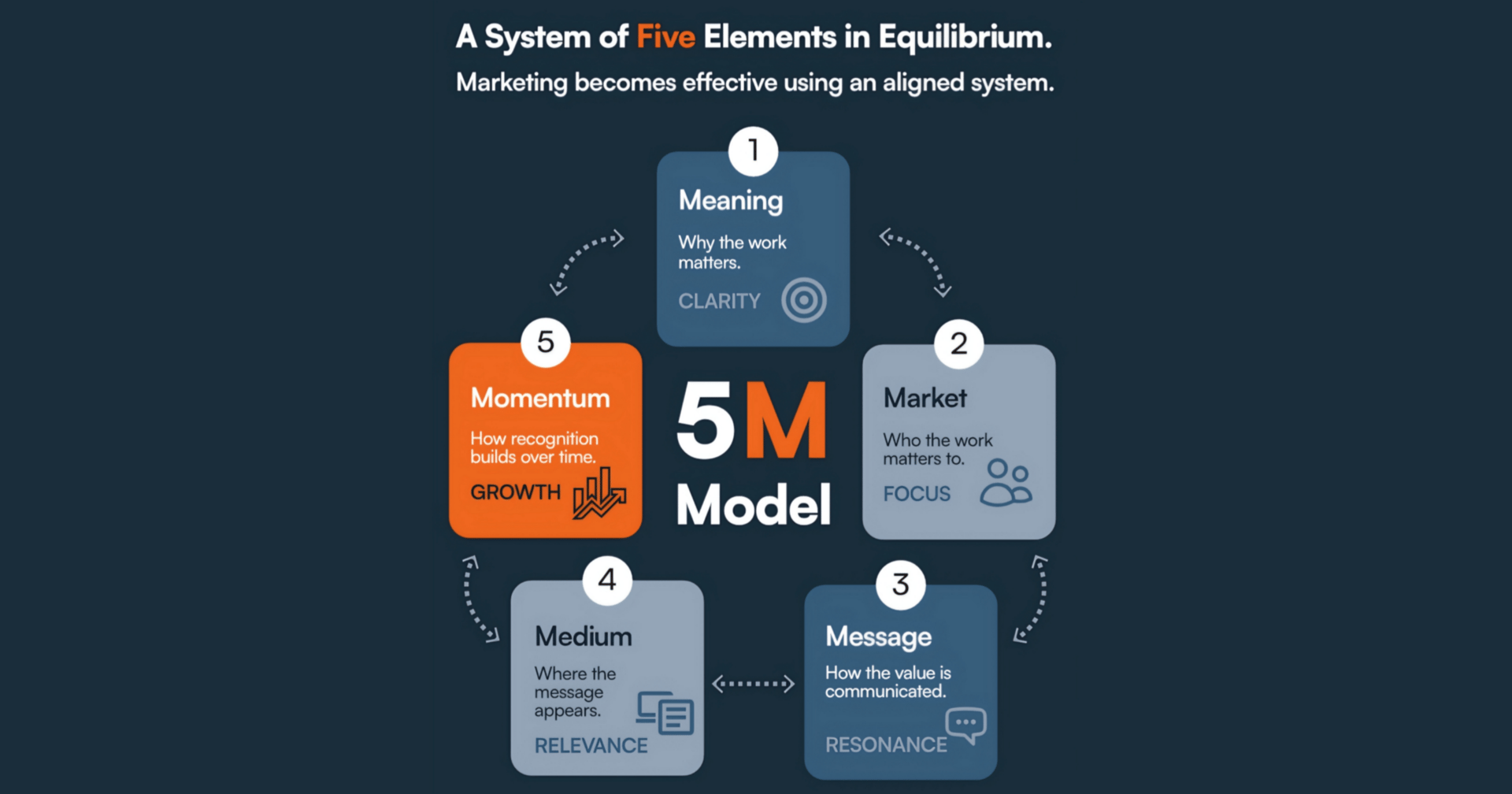
In technical and B2B environments, strategy helps create alignment across meaning, market, message, medium, and momentum. Without that structure, communication starts becoming dependent on interpretation instead of consistency.
That distinction matters more than many organizations realize.
Execution improves individual marketing activities. Strategy creates shared understanding behind them. A new website may improve presentation. Content may increase visibility. Revised proposals may improve specific conversations. But strategy is what helps communication stay coherent across departments, touchpoints, and business development efforts over time.
Without it, marketing often becomes reactive.
More activity gets produced, but teams still spend unnecessary time clarifying the business internally and externally. Communication becomes heavier to maintain. Different interpretations of the company continue circulating at the same time.
The organizations that navigate this transition well are usually the ones that recognize strategy as operational structure, not just marketing support.
Once that structure exists, the shift becomes noticeable. Marketing starts reinforcing business development more naturally. Messaging becomes easier to maintain across teams. The organization becomes easier to understand internally and externally.
Not because the business changed overnight.
Because the structure supporting how it communicates finally caught up with how the company had already grown.