
Strong technical work still needs interpretation.
Technical organizations are built around expertise.
Engineers solve problems inside real-world constraints. Environmental consultants navigate regulation, remediation, risk, and compliance. B2B SaaS companies build systems that support reporting, interpretation, operations, and decision-making where precision matters.
The work itself is often rigorous and highly specialized.
Yet one issue appears repeatedly across technical industries: buyers do not always understand the value as clearly as the organization understands the work.
Inside the company, the methodology makes sense. Teams understand the complexity, the process, and the technical decisions behind the work. Over time, that internal understanding can start feeling obvious.
Outside the organization, it is not obvious at all.
Clients are rarely evaluating technical expertise in isolation. They are trying to understand relevance. Risk. Operational impact. Confidence. They are asking questions like:
Why does this matter in our situation?
What problem does this reduce?
Why is this the right approach for us?
What happens if this is done poorly?
This is where many technical organizations unintentionally start over-explaining instead of translating.
There is a difference.
Explanation focuses on describing the work accurately. Translation connects the work to how buyers evaluate value.
A proposal can be technically correct and still leave too much interpretation sitting with the client. A website can explain methodology thoroughly while making it difficult to understand where the company is strongest commercially. Teams can communicate expertise consistently while still communicating value inconsistently.
That distinction matters in B2B and engineering environments because decisions are rarely made by one type of stakeholder.
Some people evaluating the work are technical. Others are operational, financial, regulatory, or executive. Strong communication needs to bridge all of those perspectives without diluting the rigor behind the work itself.
This is where positioning and messaging start becoming important.
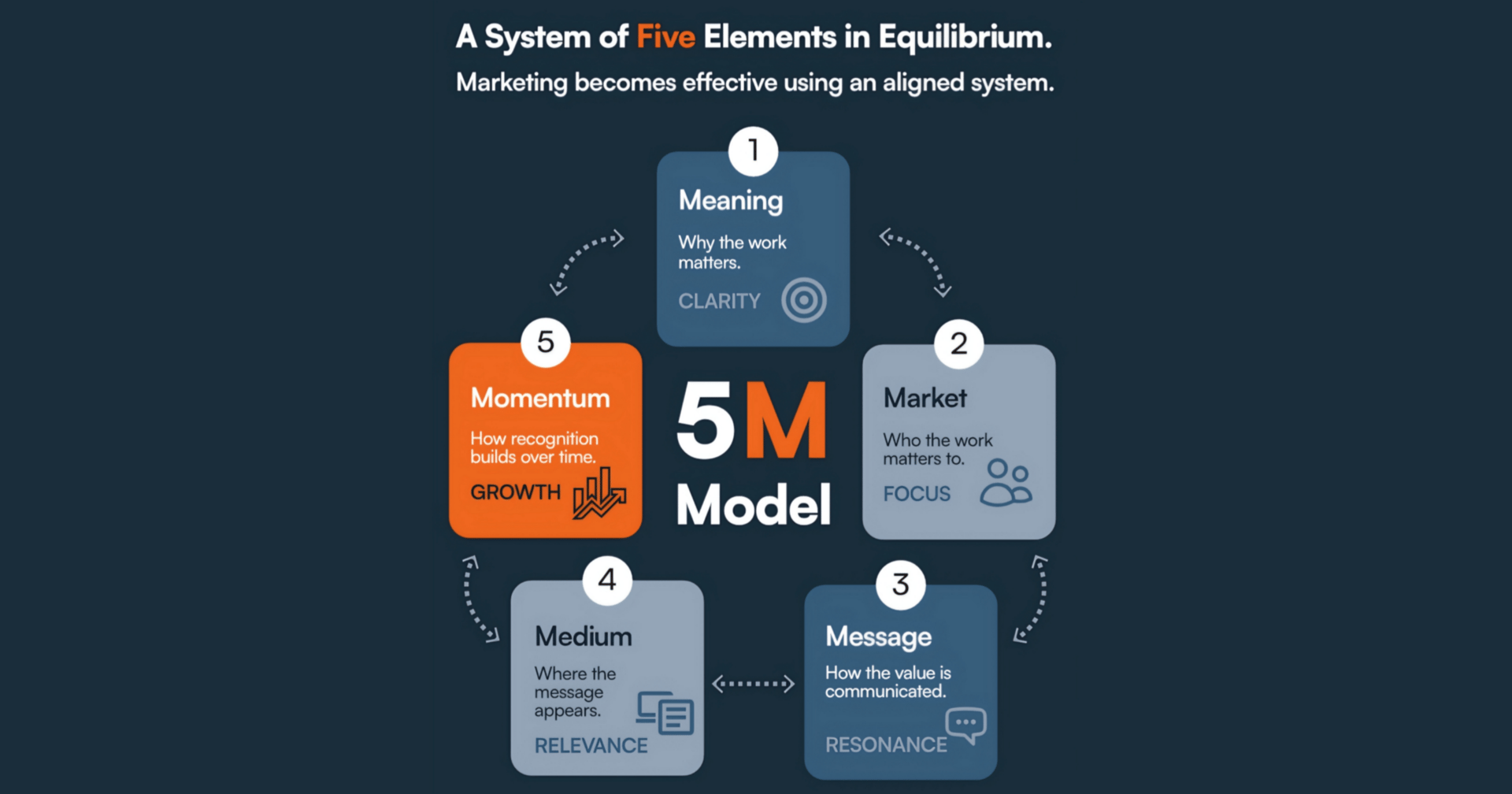
In technical organizations, translation depends on clarity across meaning, market, and message. The company needs alignment around:
what it actually stands for
where it is most relevant
how value should be communicated consistently across proposals, conversations, presentations, and marketing
Without that structure, communication often becomes dependent on the individual leading the conversation.
Some proposals build trust quickly. Others require extended clarification. Some teams naturally connect technical depth to business relevance, while others default heavily into explanation.
Over time, that inconsistency shapes perception.
The expertise itself is usually not the problem.
The challenge is whether people can clearly understand why that expertise matters in their own context. Once that connection becomes easier to recognize, trust builds faster, conversations become more efficient, and technical value becomes easier to carry across the organization.