
Strong technical and service companies still get misunderstood.
Many technical and B2B organizations operate for years without formally defining their positioning.
The work is strong. The team is experienced. Client relationships exist. Projects continue moving forward. From the inside, it can feel reasonable to assume the market already understands the value of the business.
That assumption is usually where the problem starts.
Unclear positioning rarely looks dramatic at first. Most organizations continue functioning perfectly well for quite a while. Work still gets delivered. Opportunities still come through relationships and reputation. Revenue still moves.
But over time, growth starts becoming heavier than it needs to be.
Sales conversations take longer.
More explanation is required in meetings.
Messaging changes depending on who is speaking.
Marketing activity increases without creating the cumulative momentum the organization expected.
Nothing feels completely broken.
Yet understanding stops holding consistently.
That distinction matters more than many technical organizations realize.
Positioning is often mistaken for wording. A tagline. A headline. A sentence on a website. Those things may express positioning, but they are not the structure itself.
Positioning is what helps people understand where your organization fits, why it matters, and when it becomes the right choice over alternatives.
When positioning is clear, communication starts reinforcing itself naturally. A proposal supports the same understanding a website introduced. Business development conversations build on existing market perception instead of recreating it from scratch each time. Marketing compounds instead of operating as disconnected activity.
When positioning is unclear, the opposite starts happening.
Leadership emphasizes one aspect of the company.
Technical teams emphasize another.
Business development focuses on responsiveness or relationships.
Marketing attempts to hold all of it together at once.
Each perspective may be true.
But they do not always reinforce one another.
From the outside, this often reads as inconsistency. From the inside, it can look like flexibility.
Over time, that flexibility becomes expensive.
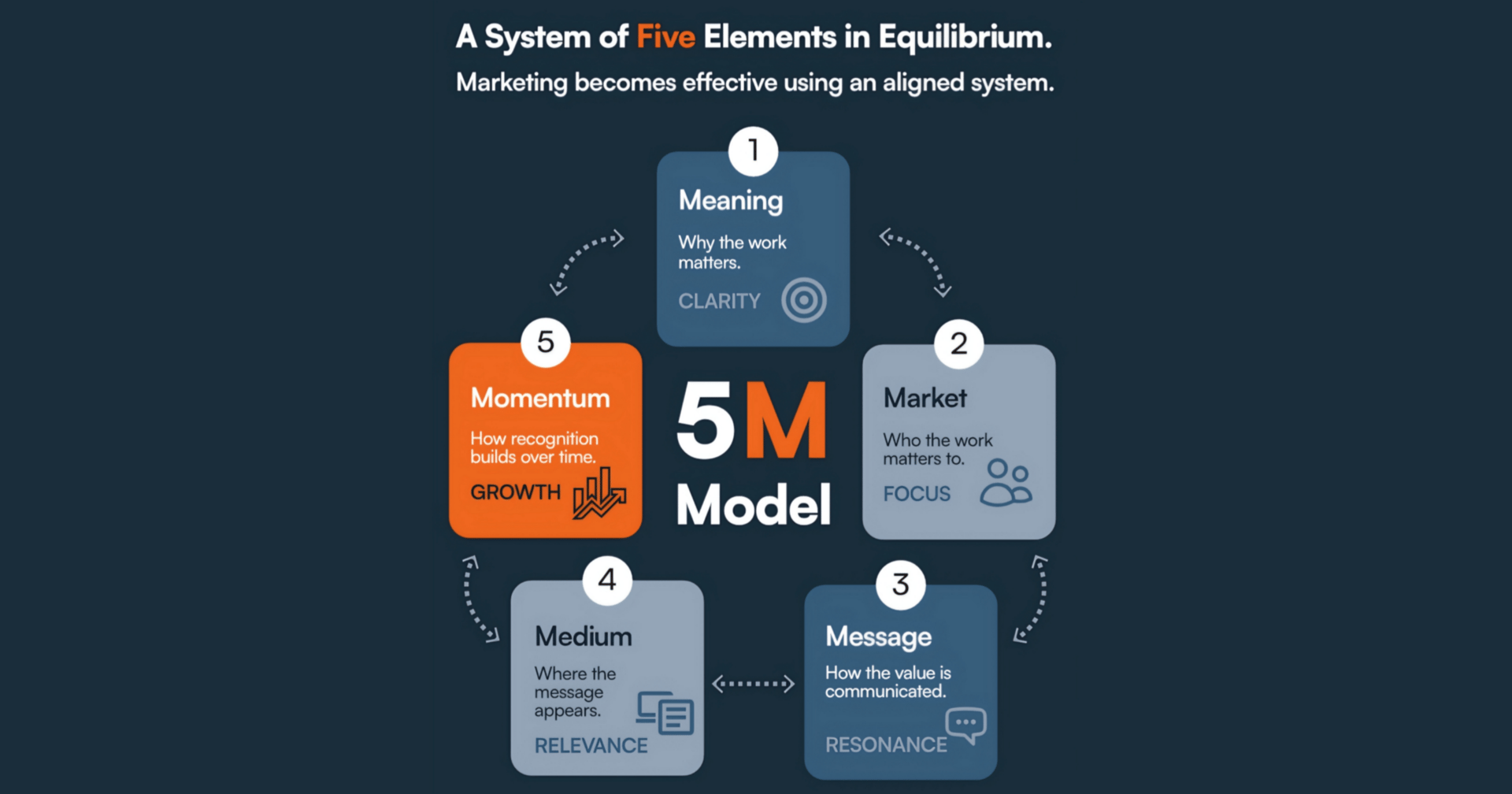
In technical and B2B organizations, positioning creates alignment across meaning, market, and message. It helps establish:
what the company should be known for
where it is most commercially relevant
how value should be communicated consistently across touchpoints
Without that structure, communication becomes increasingly dependent on individuals carrying clarity manually in conversations, presentations, proposals, and sales processes.
That creates operational drag.
Business development carries more interpretive burden than it should. Sales cycles lengthen because understanding arrives too late. Marketing becomes more active without strengthening market memory in a meaningful way.
The work itself is often still excellent.
The issue is that excellent work does not automatically create clear positioning.
Once positioning becomes defined properly, the shift is usually noticeable.
Conversations become more focused. Messaging becomes easier to maintain across teams. Marketing starts reinforcing business development instead of competing with it. The organization becomes easier to understand, remember, and trust.
Not because the business changed overnight.
Because understanding finally started holding consistently.