
When structure became the missing link.
Technical organizations rarely struggle because the work lacks credibility.
The expertise is usually real. Engineers solve operational problems inside real-world constraints. Environmental consultants manage risk, remediation, compliance, and regulation. B2B SaaS companies build systems that support analysis, reporting, and decision-making where precision matters.
Yet many technical organizations still look at their website and feel something is off.
The site may explain the work accurately while still failing to create the right conversations. It may feel difficult to navigate. Leadership may feel the company appears less sophisticated online than it does in practice.
Naturally, attention turns toward the website itself.
The redesign conversation begins.
New copy gets requested.
Pages are reorganized.
SEO becomes a focus.
Visuals improve.
Navigation changes.
Calls to action are revised.
Some of these updates absolutely help.
But many organizations eventually find themselves revisiting the same concerns again a few years later.
That pattern matters.
In many technical and B2B companies, the frustration is directed at the website even when the deeper issue started much earlier. The site is often carrying unresolved decisions about positioning, audience, messaging, and value interpretation all at once. Design simply becomes where that confusion becomes visible.
This is especially common in technical environments because organizations are trying to communicate multiple services, audiences, capabilities, and differentiators simultaneously. Everything feels important internally, so everything gets equal emphasis externally.
The result is usually a website filled with information but lacking hierarchy.
Readers are left trying to interpret:
what the company is actually strongest at
who the business is really built to support
what differentiates it commercially
why it should be remembered over alternatives
The more interpretive work the reader has to do, the weaker the website becomes.
Not because the expertise is weak.
Because understanding is arriving too late.
Strong technical websites do not work simply because they look modern or polished.
They work because the underlying structure supporting them is coherent. The homepage reinforces the same positioning the service pages support. Messaging builds progressively instead of competing internally. Information is organized around relevance, not just completeness.
That distinction changes everything.
In technical organizations, websites often become repositories of capability instead of systems for interpretation. Teams try to communicate the full scope of the business all at once instead of helping the right audience understand the right things in the right order.
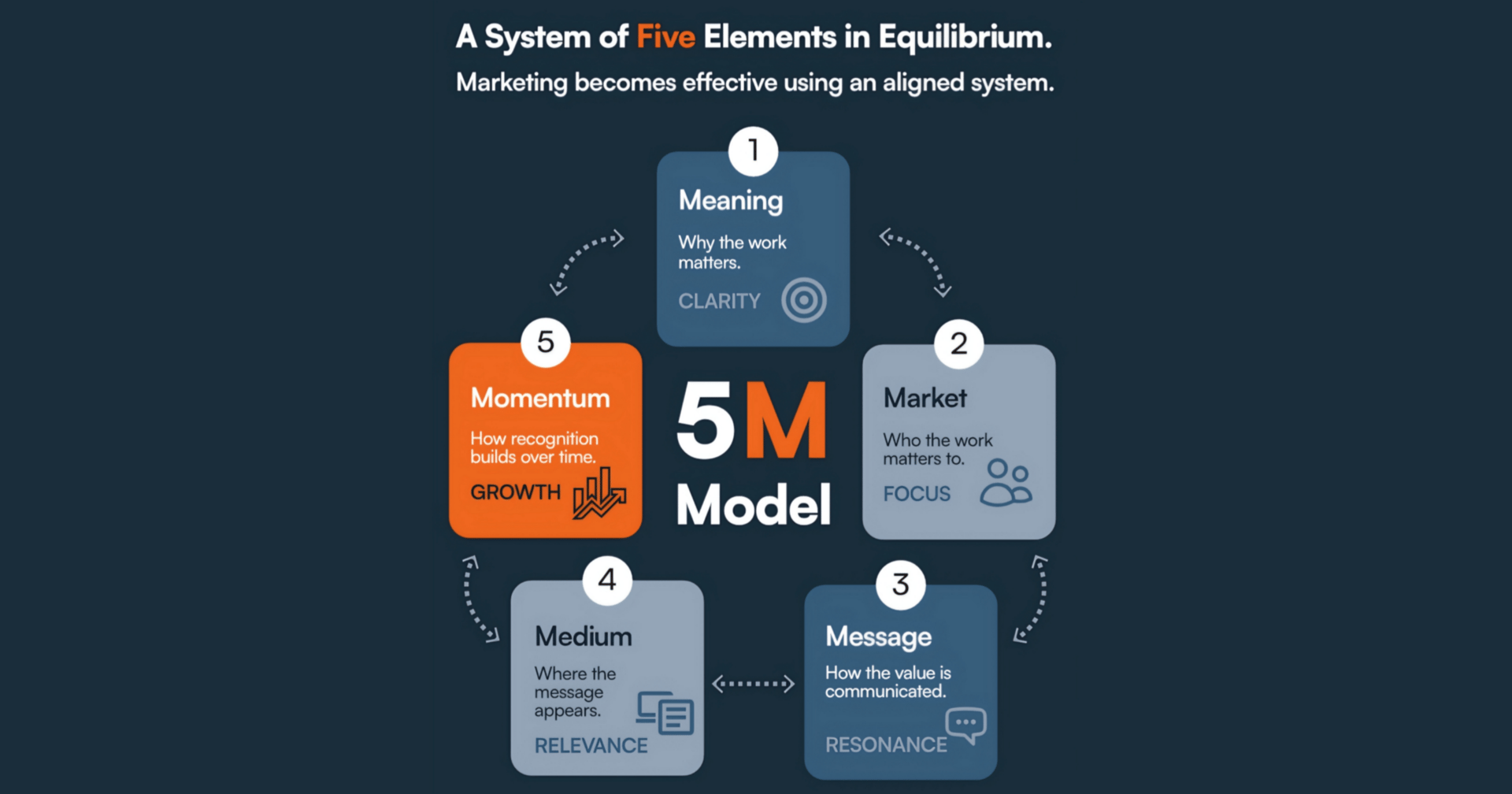
When alignment exists across meaning, market, and message, websites become much easier to structure effectively. SEO becomes more focused. Content becomes more commercially useful. Design decisions become clearer because the organization understands what the website is actually trying to communicate.
This is why repeated redesigns often lead to the same dissatisfaction.
The appearance improves.
The underlying interpretation burden often does not.
A website is usually not where clarity begins. It is where clarity becomes visible.